When Movements Turn Inward: The Anatomy of a Coalition Collapse
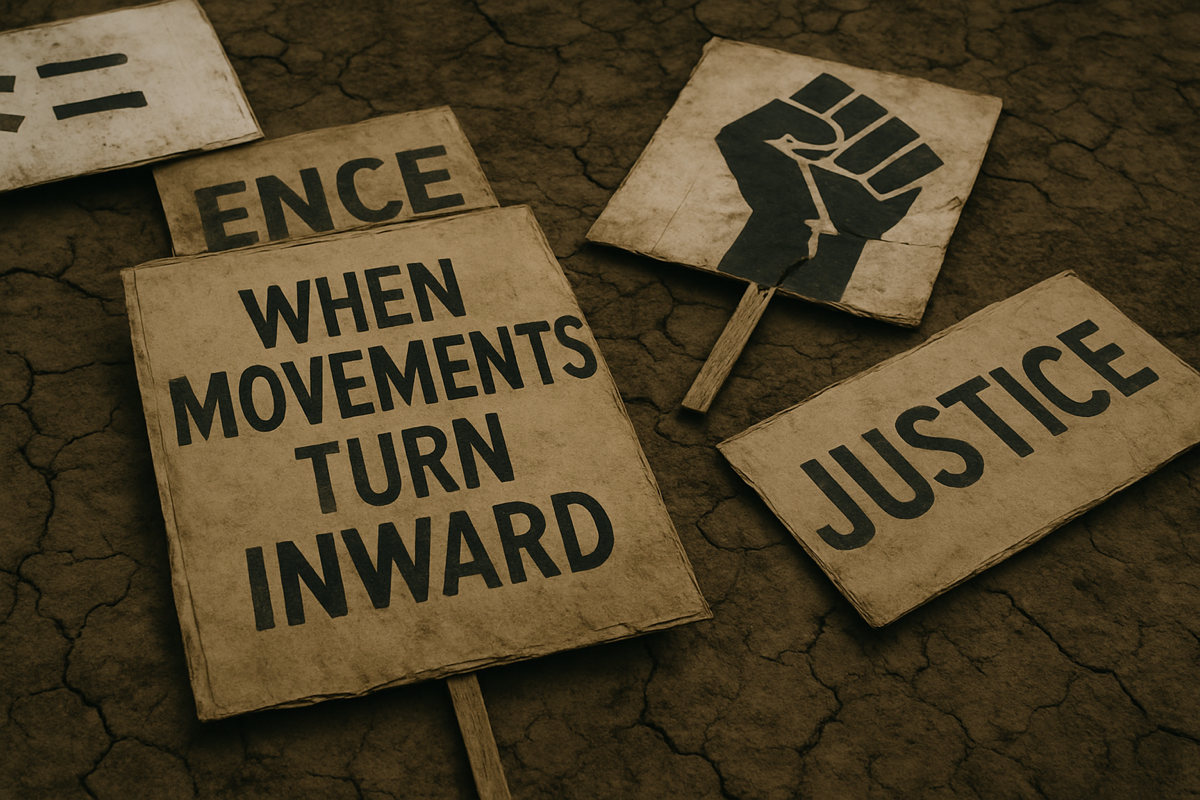
Coalitions start with fire—shared pain, shared purpose. But when progress stalls, that fire turns inward. Guilt replaces action, loyalty tests tighten, and the movement begins to eat itself alive. This is how change dies—not from outside attack, but from inside collapse.

At first, it feels unstoppable.
A coalition builds.
Different groups—different histories, wounds, identities—come together under one banner: change.
Real grievances. Real energy. Real stakes.
For a while, it works.
But every coalition carries a hidden clock ticking underneath it:
How long can it hold before it turns on itself?
The answer?
Not forever.
Not even close.
Phase 1: Building the Coalition
At the beginning, the movement feels alive.
- Mutual anger.
- Shared pain.
- A clear external enemy.
It’s not about perfect agreement—it’s about momentum.
Nobody wants to pick at the fractures yet. The mission matters more.
For now.
Phase 2: The Soft Cracks
When the external wins don’t come fast enough—
when promises made to the base don’t materialize—
when internal contradictions start pulling at the seams—
the energy doesn’t vanish.
It turns inward.
Targets once on the outside are replaced by new ones inside the tent.
Suddenly, purity tests tighten.
Loyalty becomes more important than results.
And guilt, not action, becomes the currency.
Phase 3: Weaponized Guilt
In the scramble to explain slow progress, the coalition finds an easy scapegoat:
the “privileged” members within.
In many modern movements, this often falls on white women—
praised early as organizers, donors, amplifiers—
but later vilified as the reason the revolution stalled.
They’re accused of:
- Centering themselves.
- Speaking too much.
- Speaking too little.
- Acting wrongly.
- Failing to act at all.
It doesn’t matter what they actually did.
The narrative needs a villain inside the walls.
Phase 4: The Purge
Once guilt becomes a tool, it spreads like fire.
Coalitions stop fighting outward injustice and start policing themselves:
- Who’s the most oppressed?
- Who’s the most pure?
- Who’s the safest to blame without shattering the movement completely?
Outspoken members are silenced.
Good faith actors walk away.
Trust collapses.
The movement turns cannibal, eating its own legitimacy faster than any enemy could have dreamed.
Phase 5: The Collapse
When you punish the loyal and reward the accusers,
you don’t strengthen a movement.
You hollow it out.
By the time the fractures are obvious to outsiders, it’s already too late.
- The narrative is fragmented.
- The leadership is discredited.
- The grassroots energy is dead.
- The real powers—the ones that benefitted from the chaos—remain untouched.
And the dream that sparked the movement in the first place?
Lost.
Abandoned.
Forgotten.
Final Truths
You don’t have to take sides to see the machine at work.
You just have to be willing to see it clearly:
- Guilt as political currency always bankrupts itself.
- Internal purges don’t create unity—they mask failure.
- No movement survives once it learns to fear itself more than its enemies.
Stay awake.
Stay wild.
Stay harder than the machine.